Collector Car Market Outlook 2026: Trends Shaping Enthusiast Demand
Understanding the currents moving through the collector market is essential for anyone considering an acquisition, a disposal, or simply the long-term stewardship of a significant collection.
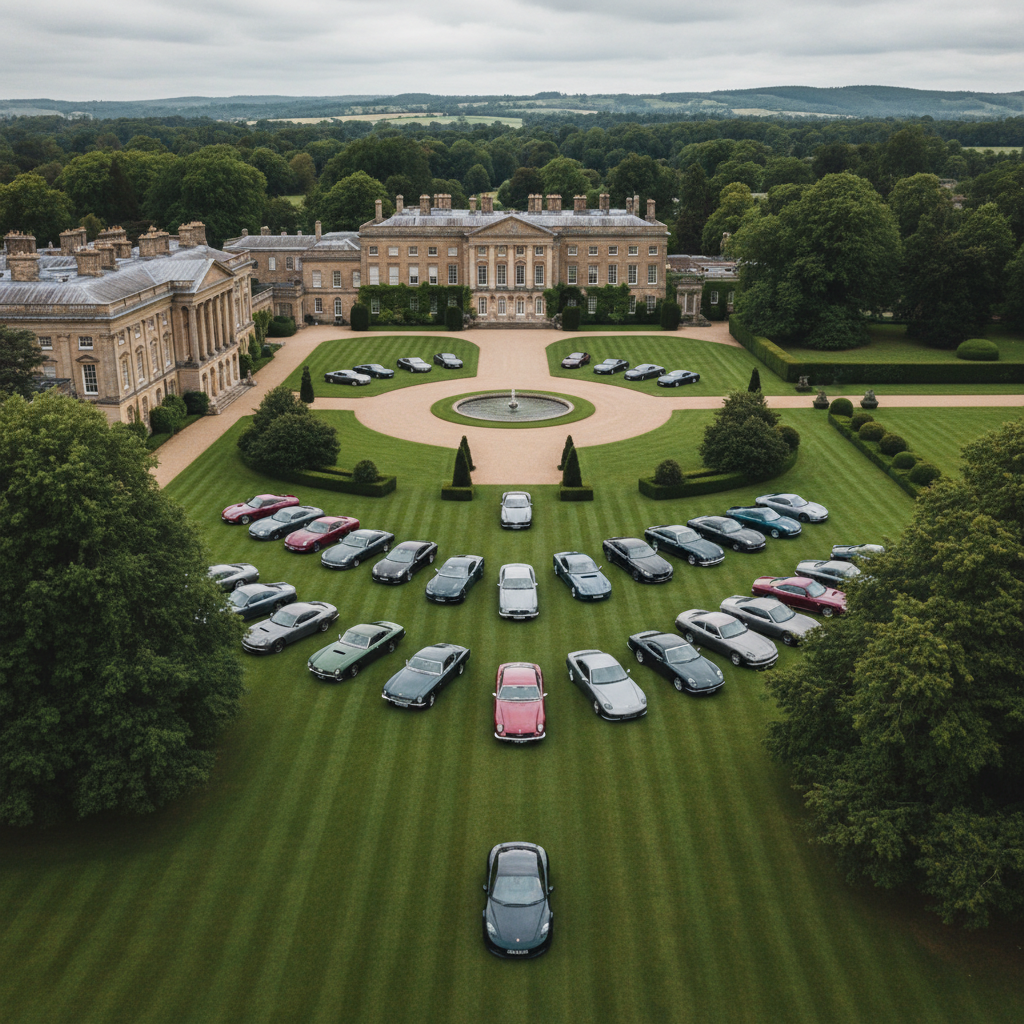
Collector Car Market Outlook 2026: Trends Shaping Enthusiast Demand
The collector car market does not move in a single direction. It is a collection of interconnected sub-markets - defined by marque, era, specification, and geography - each responding to its own set of enthusiast drivers, cultural influences, and generational shifts in taste. Understanding these currents, and how they interact, is valuable context for any collector or prospective buyer navigating the market today.
This is not a forecast. The collector car market resists prediction with the same consistency that it rewards patience and knowledge. What it does offer, to those who observe it carefully, is a set of identifiable patterns - shifts in collector sentiment, changing priorities around authenticity and experience, and a gradual recalibration of which vehicles are considered most significant by the most engaged and informed buyers.
What follows is our perspective on the themes shaping collector enthusiasm in 2026 - observations drawn from our own market activity, conversations with collectors and specialists across the UK and internationally, and a careful reading of where buyer energy is currently concentrated.
The Enduring Appeal of Analogue Performance Cars
If there is a single theme that has defined collector sentiment over the past several years, and which shows no signs of diminishing in 2026, it is the sustained and deepening appreciation for analogue driving experiences.
By analogue, collectors mean something specific: naturally aspirated engines, manual gearboxes, hydraulic steering, and the unmediated connection between driver input and vehicle response that characterised the best performance cars of the 1990s, 2000s, and the early part of the following decade. These are experiences that cannot be replicated by contemporary vehicles, however technically sophisticated those vehicles may be.
This is not nostalgia in a passive sense - it is an active and increasingly articulate preference. Collectors who drive their cars, as opposed to storing them purely as static assets, consistently report that the engagement offered by a well-sorted naturally aspirated manual car is qualitatively different from anything available in a new showroom. The Porsche 997 GT3 RS 4.0, the Honda NSX Type R, the Ferrari F40 - each represents a philosophy of driver engagement that has become more, not less, valued as the mainstream performance car market has moved towards hybridisation and electrification.
For the collector market, this preference has translated into sustained and in many cases growing enthusiasm for the cars that best embody it - a trend that appears structural rather than cyclical.
Modern Classics Continue to Mature
The cars of the late 1990s through the 2010s occupy an increasingly interesting position in the collector hierarchy. This generation of vehicles - old enough to have established histories and defined market positions, young enough to remain mechanically comprehensible and practically usable - is attracting collector attention in a way that the purely historical market does not always replicate.
Within this space, a number of models have established clear collector credentials over recent years. The BMW M3 CSL, the Honda NSX, the Lotus Elise Sport 135 in its earliest forms, and mid-cycle Aston Martin V8 Vantage variants have all developed followings that are characterised by genuine knowledge and engaged ownership rather than purely speculative interest.
What is notable about this generation is the increasing sophistication of collector assessment. Buyers in this segment are, as a group, highly informed about production numbers, specification significance, and the importance of documented originality. A BMW M3 CSL with a clear service history, original paint, and verifiable ownership documentation is assessed very differently to an otherwise identical car without those elements - and the market reflects that distinction with increasing clarity.
As this generation of vehicles continues to age into more established collectibility, the quality of individual examples - rather than simply the desirability of the model - is becoming the primary driver of collector interest.
Limited Production Models
The collector market's appetite for genuinely limited production vehicles shows no meaningful sign of diminishing. If anything, the clarity of the preference has sharpened: buyers are increasingly interested in understanding exactly why a car's production was constrained, and whether that constraint reflects deliberate engineering or commercial intent.
Factory homologation variants, road-legal competition derivatives, and models produced in response to specific regulatory requirements carry a different character of rarity to cars that are simply expensive or artificially scarce. The Porsche 911 R's 991-unit production run, the McLaren P1's 375-car allocation, and the Aston Martin Valkyrie's road car series each represent constraints that are inseparable from the car's engineering purpose - and that connection between rarity and technical intent is increasingly well understood by serious collectors.
The implication for acquisitions is significant. Models whose limited production is grounded in a genuine engineering or regulatory narrative tend to sustain collector interest more durably than those whose scarcity is primarily a commercial positioning decision. That distinction is not always immediately apparent, but it becomes legible over time in how the market behaves.
Provenance and Authenticity Becoming Increasingly Important
The most consistent shift in collector priorities observed across the past several years is the increasing weight attached to provenance and authenticity - and in 2026, this trend has become a defining characteristic of the market's most engaged segment.
A decade ago, a significant collector vehicle with incomplete documentation but strong visual presentation could still command attention from a meaningful proportion of potential buyers. Today, the most informed segment of the market treats documentation gaps not as a minor inconvenience but as a fundamental question that requires resolution before any acquisition can proceed.
This shift is partly generational. Younger collectors who have entered the market over the past decade have been educated in an environment where provenance research tools, marque registries, and specialist authentication services are widely available. They approach acquisition with a due diligence rigour that reflects that access - and they are not easily satisfied by assurances that cannot be substantiated.
“The market has become more intelligent about what provenance actually means. Buyers today are not simply asking whether documentation exists - they are asking whether it tells a consistent, verifiable, and complete story.”
For sellers, this trend has a clear implication: the investment in maintaining a complete and coherent history file across the lifetime of ownership is increasingly reflected in the ease and terms of eventual disposal. Cars that are well documented are simply easier to sell, and to the right buyers, at appropriate prices.
The Rise of Curated Collections
Another identifiable theme in 2026 is a shift in how serious collectors think about the composition of their holdings. The model of accumulation - acquiring broadly across marques, eras, and types - is giving way, in many cases, to a more curated approach in which individual collections are assembled around a coherent philosophy.
This may manifest as a focus on a single marque across generations - a Porsche collection that traces the GT3 programme from its origins to the present day, or an Aston Martin holding that follows the DB lineage through specific production milestones. It may reflect a thematic interest in racing homologation vehicles, or a preference for a specific period of automotive design.
The effect on acquisition strategy is meaningful. Curated collectors are typically more patient, more specific in their criteria, and more willing to wait for the right example rather than settling for an available one. They are also, as a group, among the most knowledgeable buyers in the market - which means that the cars they acquire are assessed to a higher standard than the general market applies.
For advisors, working with curated collectors requires a correspondingly high level of market knowledge and a genuine understanding of what each specific vehicle represents within the collector's broader philosophy.
What Collectors Are Prioritising in 2026
Synthesising these themes, a clear picture emerges of where collector attention is concentrated in the current market:
Natural aspiration continues to command a premium across segments, reflecting the understanding that high-revving, sonically expressive engines represent a form of engineering that is unlikely to be produced in significant numbers again.
Manual gearboxes carry a specific desirability within the performance car segment that is increasingly distinct from simply preferring a particular driving experience. The manual transmission has become a statement of collector intent.
Originality over modification is the consistent preference of the most engaged buyers. Well-intentioned upgrades, retrospective personalisation, and undocumented changes all reduce a car's collector appeal in a market where authenticity is increasingly valued.
Documentation completeness has moved from a supporting factor to a primary criterion. Cars without coherent history files face a meaningfully smaller pool of serious buyers.
Usability alongside collectibility is a priority for a significant proportion of current collectors. The preference is for cars that can be driven and enjoyed - not simply preserved and admired. This orientation has benefited models that offer genuine road capability alongside collector credentials.
Five Market Observations
-
Analogue driving experiences are structurally desirable - the shift toward electrification in the mainstream market has reinforced, rather than diminished, collector enthusiasm for naturally aspirated and manually transmitted cars.
-
Modern classics are attracting increasingly sophisticated buyer assessment - the late 1990s to 2010s generation is producing clear collector hierarchies, and documentation quality is a primary differentiator within them.
-
Production-constrained models with engineering rationale sustain interest more durably than those whose scarcity is primarily commercial - a distinction that becomes more apparent over time.
-
Provenance has moved from supporting factor to primary criterion - incomplete histories are no longer easily overcome by strong visual presentation in the most engaged segment of the market.
-
Curated, philosophically coherent collections are replacing broad accumulation as the dominant model among serious collectors - with meaningful implications for acquisition strategy and the time horizons applied to sourcing.
Conclusion
The collector car market in 2026 is not a uniform environment. It is a landscape of specific enthusiasms, carefully formed preferences, and increasingly sophisticated assessments of what makes a particular vehicle genuinely significant.
For collectors and prospective buyers, the most valuable orientation is one of informed patience. Understanding which characteristics are driving genuine and durable collector interest - analogue experience, provenance quality, production significance, and curatorial coherence - provides a foundation for acquisition decisions that are likely to be well regarded not just at the point of purchase, but across years of ownership.
The market continues to reward knowledge, rigour, and the willingness to wait for the right car rather than settling for the available one. Those principles have always defined the best collector acquisitions - and in 2026, they are as relevant as they have ever been.
If you would like to discuss how current market themes apply to your acquisition criteria or collection strategy, TJ Bespoke would be pleased to advise. We offer confidential consultation on sourcing, portfolio review, and long-term collection management. Please contact us to arrange a conversation with our advisory team.